Storm & Hail Damage Roof Repair
Request your roof estimate
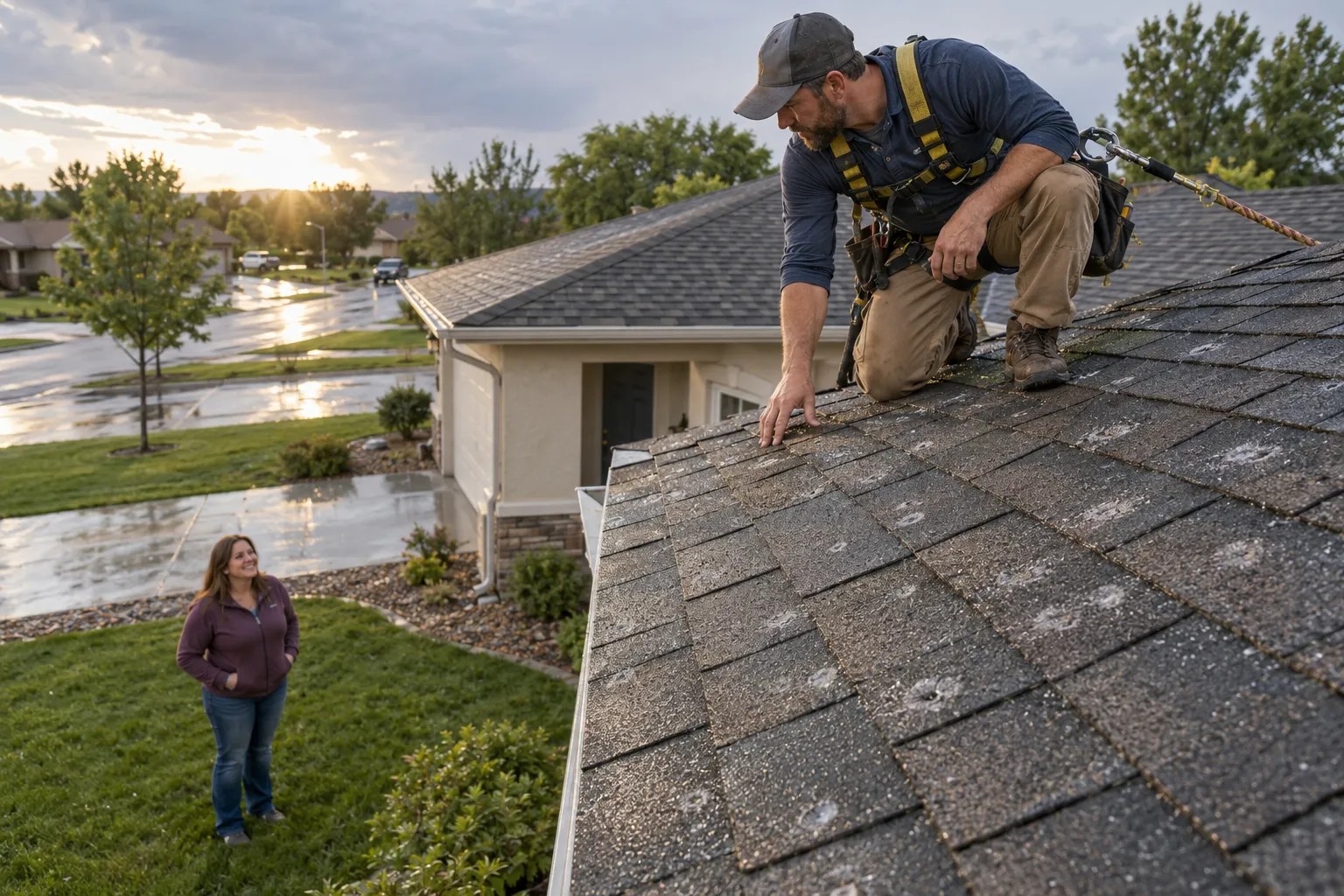
A storm can harm a roof in ways you cannot see from the yard. Hail bruises shingles. Wind lifts edges and loosens flashing. A branch can crack the surface and the boards beneath it. Some damage shows up as a stain on the ceiling. Some stays hidden until the next heavy rain.
Wavesof Roofing is a referral service. We do not do the roofing. We explain what you can safely check from the ground, then connect you with independent local roofing providers in the Sacramento area. A provider inspects the roof, explains what they find, and gives you a quote in writing. You can then decide if the roof needs repair or a full replacement, with no obligation to hire anyone.
First, Look Up: A Ground-Level Safety Check
The storm has passed. The roof may still be unsafe. Do these checks from the ground only.
- Look for sagging lines, missing shingles, or bare patches.
- Check the yard and gutters for granules, chips, or broken branches.
- Scan ceilings and walls for new stains, drips, or bulges.
- Stay far from downed power lines and wet attic wiring.
If a ceiling bulges with water, keep people out of that room. Do not poke it open unless you can do so from a safe spot.
Pro-Only Steps After a Storm
Never climb a wet or damaged roof. Hail knocks loose granules that roll like marbles underfoot. Weakened boards can give way without warning.
These steps are pro-only:
- Walking the roof surface
- Lifting shingles to check for hidden cracks
- Testing flashing and vent seals
- Setting a tarp or temporary cover
Providers use harnesses, fall protection, and ladders set for the job. That gear is the difference between a careful check and an injury.
What You Can Safely Do Yourself
First, keep it simple. Next, document. Then wait for a pro.
1. Take dated photos from the ground, including the yard and any fallen debris. 2. Set buckets under drips and move furniture away. 3. Cover valuables with plastic sheeting indoors. 4. Write down the date and type of storm. 5. Keep every receipt for supplies you buy.
Why Storm Damage Needs Prompt Attention
Small openings let water in. In areas with long dry seasons and winter rain events, a hurt roof can look fine for months. Then the first big rain finds the weak spot.
Wet insulation, stained ceilings, and soft decking follow. Stucco walls can also take on moisture where the roof meets the wall. Waiting makes the list longer. Many providers can respond quickly, but availability varies. Request a callback to check provider availability for emergency roof repair or a storm inspection.
Types of Storm Damage
Know what to describe when you talk to a provider.
- Hail bruising: Dents or dark spots where granules are knocked off.
- Wind lift: Shingles curled, creased, or gone.
- Impact damage: Cracks or holes from branches or flying debris.
- Flashing and vents: Bent metal or loose seals around chimneys and pipes.
- Gutters and fascia: Dents that hint the roof took the same hit.
What a Storm Damage Inspection Covers
A provider usually works in this order:
1. Roof surface, checking each slope for hail marks and lifted edges 2. Flashing, vents, and skylights 3. Gutters and edges 4. Attic, looking for daylight, damp wood, or wet insulation 5. A written summary with photos
Ask for the photos. They help you compare quotes and support a claim.
Repair or Replace After a Storm?
Repair fits when damage is small and the rest of the roof is sound. A few lifted shingles or one bent flashing piece may be a limited job.
Hail damage roof replacement often makes sense when bruising covers most slopes, shingles are brittle, or decking is soft. Age matters too. Many 1950s to 1980s tract homes carry roofs that were already near the end of their life. A fix on top of worn material may not hold long.
Ask the provider to explain both options in plain terms, with a price for each.
Working With Your Insurance
Some policies may cover sudden storm damage. Check your policy for the deductible and the claim deadline. Gradual wear is usually treated differently.
- Start your claim with your insurer.
- Share your ground photos and the provider's written report.
- Providers can often help document damage for a claim.
- Read any paperwork before you sign it.
The insurer decides what is paid. A provider does not.
Be Careful With Door-to-Door Offers
After a big storm, strangers may knock and offer a quick look at your roof. Some are fine. Some are not.
- Do not sign anything on the spot.
- Be wary of pressure to decide today.
- Do not hand over a large deposit before a written quote.
- Check that the company has a local address you can verify.
Local roofing contractors in a network can be easier to vet than a crew that vanishes after the storm season.
Questions to Ask the Contractor
Bring this list to the first visit.
- Are you licensed and insured in my state?
- What exactly did you find, and can I see photos?
- Do you recommend repair or replacement, and why?
- What is in the quote: materials, labor, cleanup, permits?
- How is storm damage repair paid for, and when?
- Who handles the work, and who is on site?
Quote in writing, always. A spoken price is not enough.
How Price Gets Set
Size, slope, roof layers, material, and hidden decking damage drive the price. Access and permit rules matter too. A provider cannot know the final number until the roof is checked.
When you are ready, request an estimate and compare written quotes side by side.
What's Included
Storm Damage Inspection
A provider checks shingles, flashing, vents, gutters, and the attic, then explains what the storm did.
Photo Report
Photos of each problem area help you compare quotes and support a claim.
Written Quote
You get the scope, materials, and price in writing before any work begins.
Repair or Replace
The provider explains whether limited repair holds up or a full replacement makes more sense.
Typical Storm Damage Costs in the U.S.
These are typical U.S. ranges. Your price depends on roof size, pitch, material, and how deep the damage goes. Treat every number here as a starting point and get a written quote.
| Item | Typical range | Notes |
|---|---|---|
| Storm roof inspection | $150 – $500 | Often depends on roof size and photo report |
| Temporary tarp or cover | $300 – $1,500 | Varies with roof height and area covered |
| Minor shingle repair | $250 – $1,000 | Only works when the damage is limited |
| Flashing or vent fix | $200 – $900 | Depends on how many spots are affected |
| Decking section replacement | $500 – $2,500 | Rises if rot has spread |
| Full hail damage replacement | $8,000 – $25,000+ | Material and roof size drive the range |
How It Works
Check From Ground
Look at the roof from the yard, take photos, and note stains or drips inside.
Request an Estimate
Tell us what happened and where the roof is. We pass it to a provider.
Provider Inspects Roof
A local provider checks the roof, attic, and flashing, then explains what they find.
Compare and Decide
Review the written quote, ask questions, and choose whether to repair or replace.
Why Call Wavesof Roofing
Ground-Level Guidance First
Wavesof Roofing lists what you can safely check yourself and which steps need a professional.
Local Providers
Independent roofing providers in the Sacramento area who know local weather, housing styles, and permit rules.
Written Quotes
Every provider is asked to put scope and price on paper, so comparing is simple.
No Obligation
Request an estimate, read it, and decide on your own timeline. Nothing is required.
Other Services
Need storm & hail damage roof repair in Sacramento?
- Sort DIY steps from pro-only steps
- Get matched with local providers
- Compare written quotes
- Decide with no obligation
Storm & Hail Damage Roof Repair FAQ
- Should I get on my roof to check for hail damage?
- No. Wet or damaged roofs are slippery and boards can be weak. Look from the ground, take photos, and let a provider with fall protection do the roof walk.
- How do I know if hail damaged my roof?
- Look for dark spots, missing granules in gutters, dented vents, and dinged metal. Hail marks can be hard to see, so a provider's inspection and photos give a clearer answer.
- Will my insurance pay for storm damage to my roof?
- Some policies may cover sudden damage, but terms differ. Check your policy for the deductible and deadlines. Providers can often help document damage for a claim, and your insurer makes the decision.
Request a callback
Send a request, or Request a callback to check provider availability. Tell us what you see on your roof, and a local provider can follow up with next steps.
No obligation